 Marysfield, Port Road, Dawlish, Devon EX7 0NX


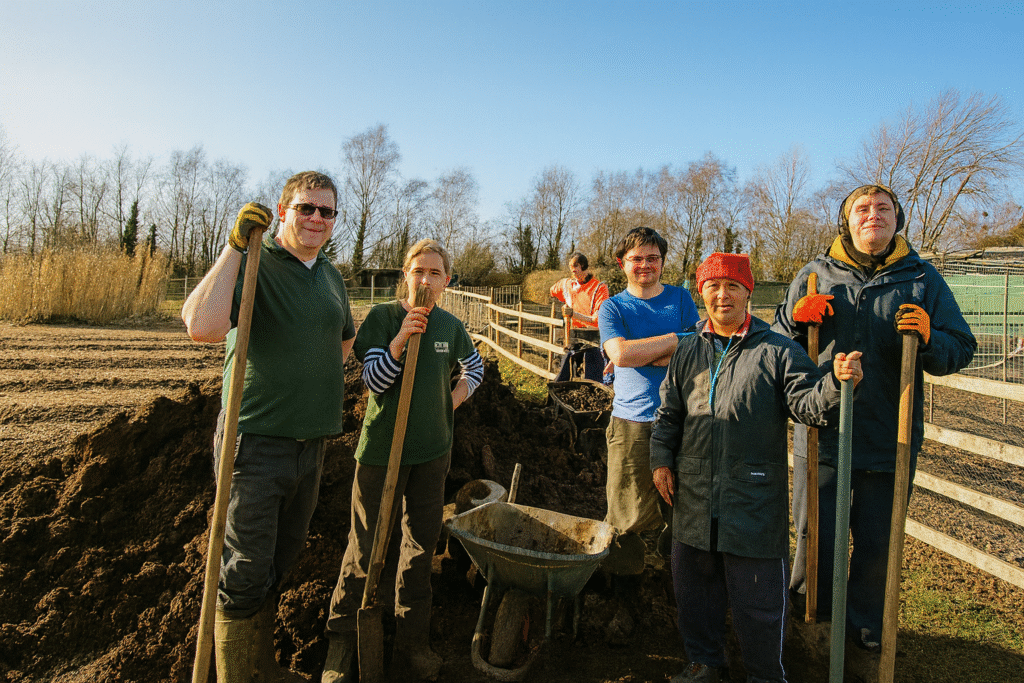
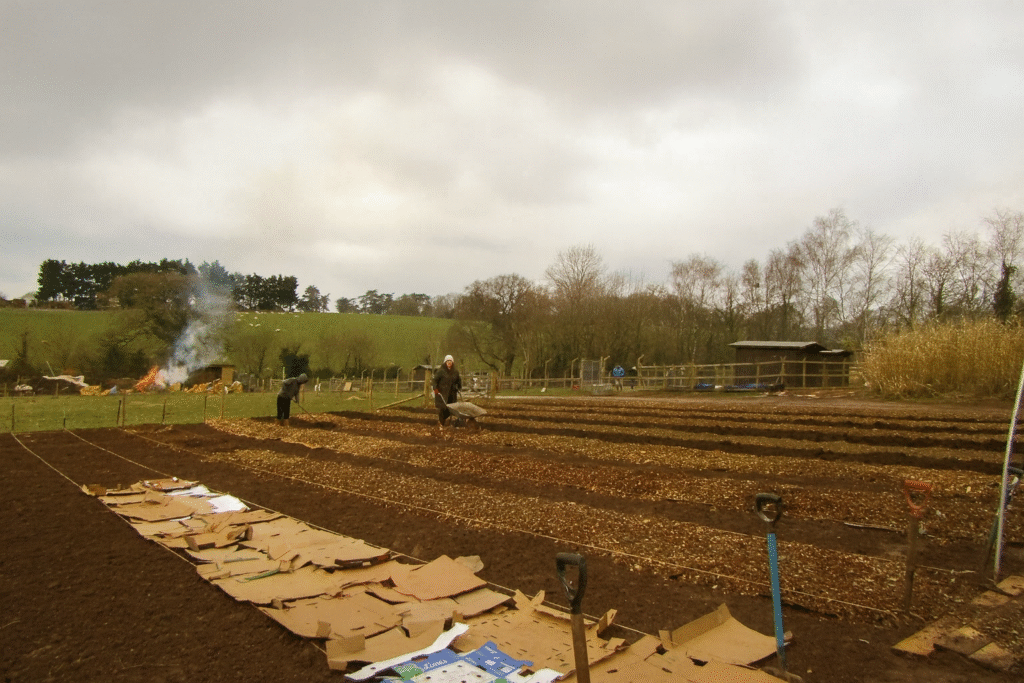
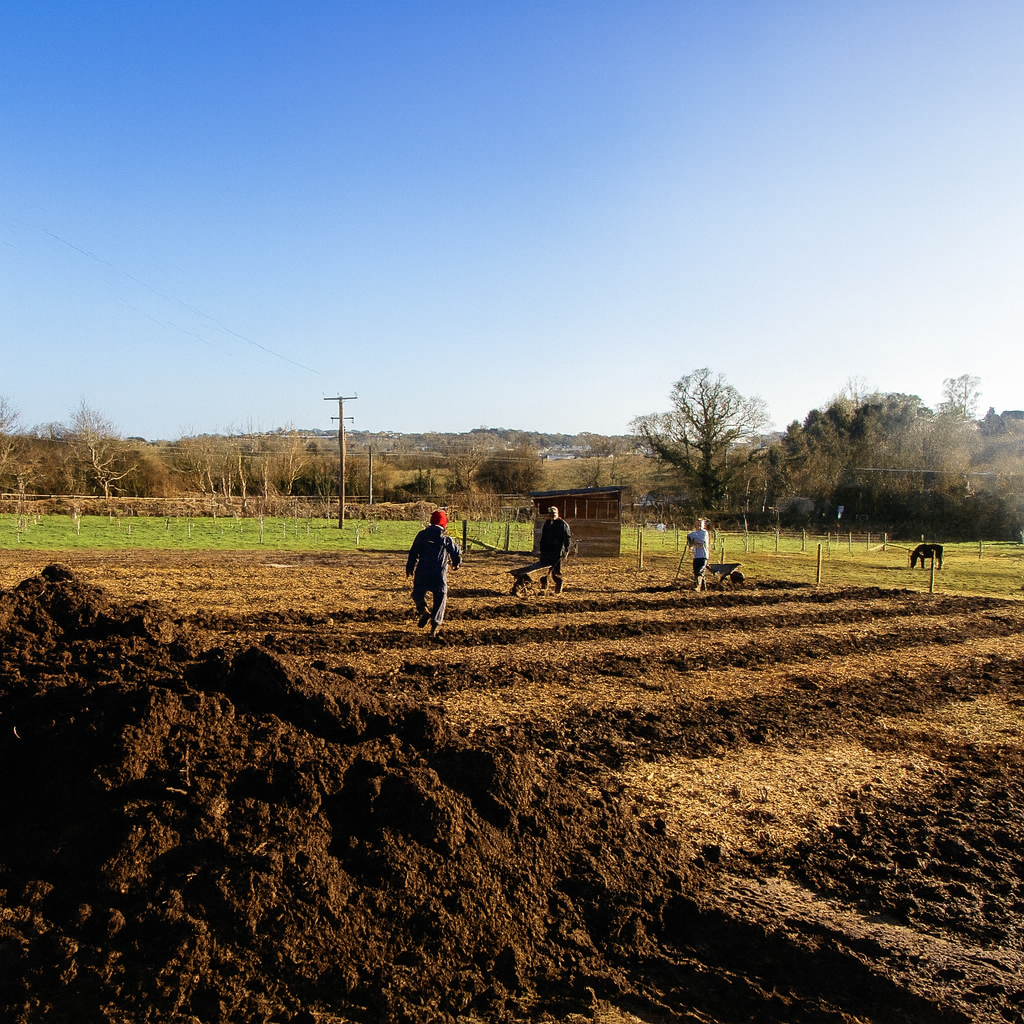
At Dawlish Gardens Trust we’ve recently introduced several no-dig beds into our growing spaces. With such a large field to manage, it can be a challenge to keep on top of all the weeding, planting, and maintenance. No-dig beds give us a practical way to organise the garden – they clearly mark out different planting areas, make weeding more manageable, and help us focus on looking after smaller, defined sections rather than the whole field at once.
This approach not only makes the garden easier to care for but also supports healthy soil and thriving crops. Here’s a closer look at what no-dig beds are and why they’re such a great choice for us.
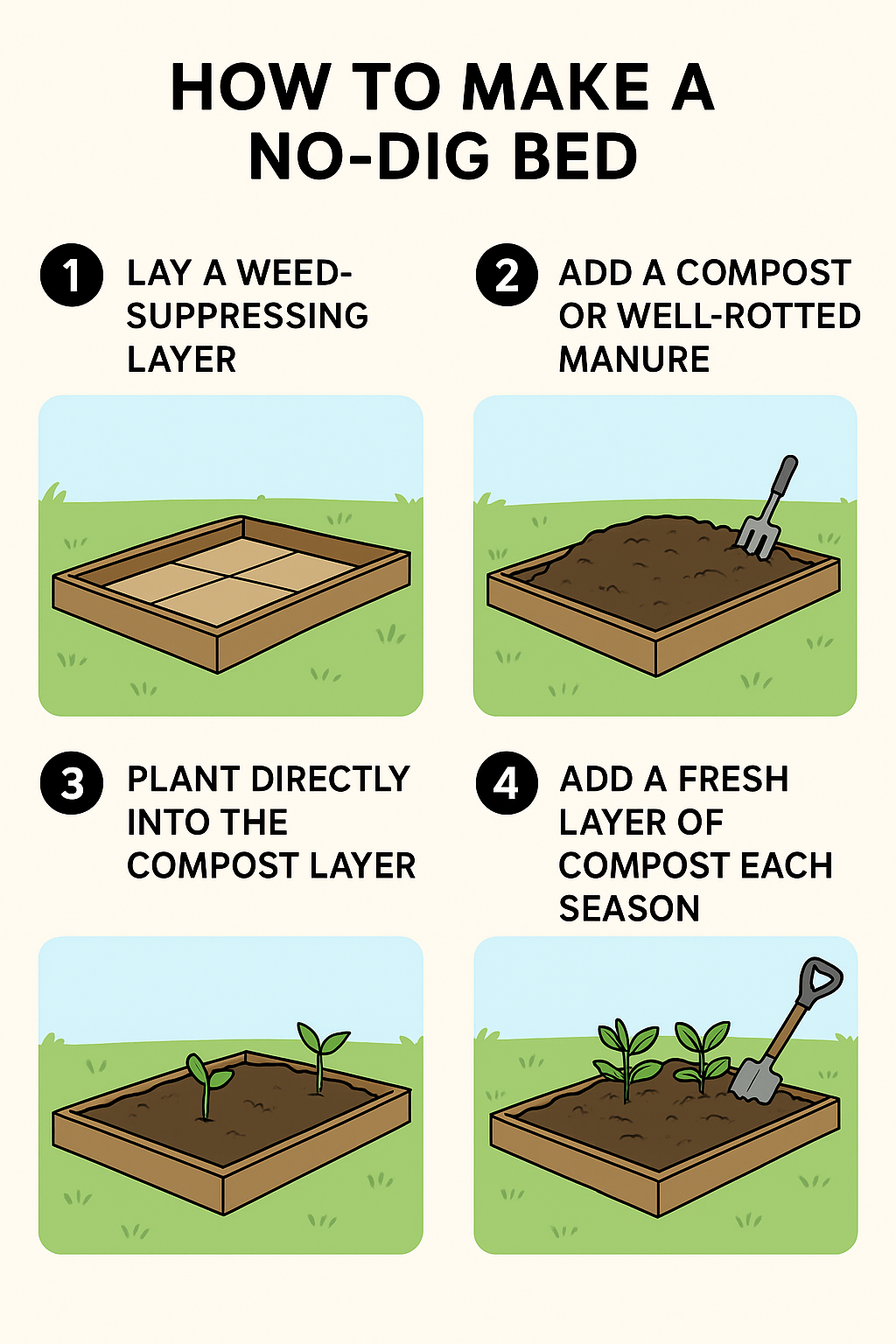
A no-dig bed (also called a no-till bed) is a method of gardening where you build and grow crops without turning or digging the soil. Instead of disturbing the soil structure, you add organic matter (like compost, manure, or mulch) to the surface, letting worms, fungi, and microorganisms do the work of breaking it down and improving soil fertility.
Key principles of no-dig gardening:
- Soil is left undisturbed: Digging disrupts soil life and brings weed seeds to the surface. No-dig avoids this.
- Compost and mulch layers: Beds are topped with compost, leaf mold, or well-rotted manure each year. This feeds plants and protects soil.
- Weeds are suppressed naturally: The mulch layer smothers weeds and makes any that do appear easier to remove.
- Healthy soil life: Microbes, fungi, and earthworms thrive, creating natural channels for air and water.
- Less work over time: Once established, no-dig beds require less maintenance than traditional dug beds.
How to make a no-dig bed:
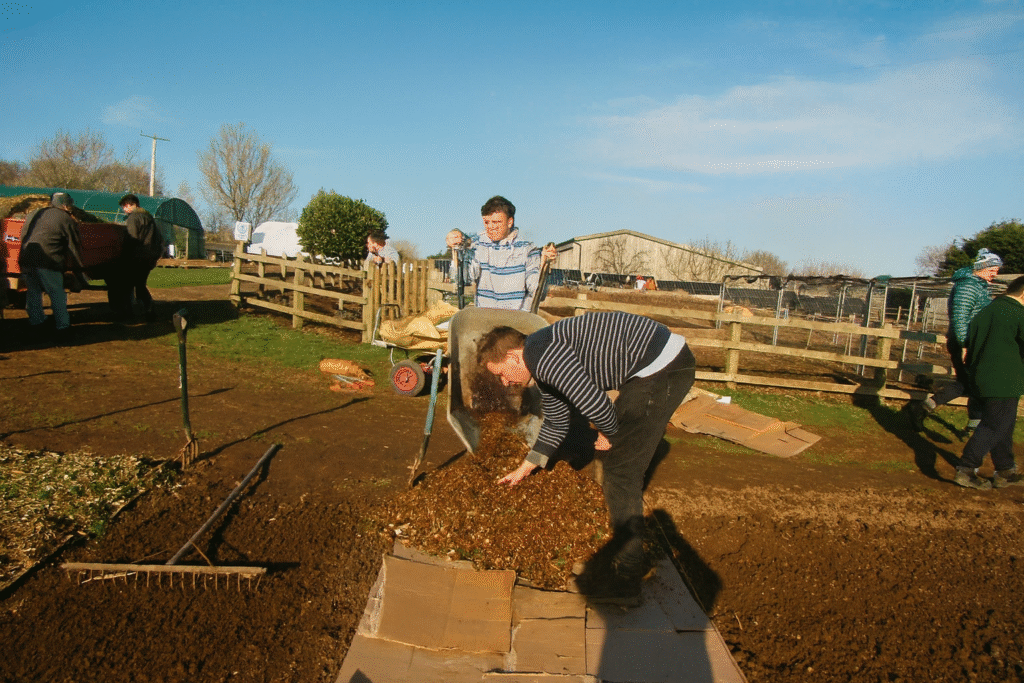
- Lay down a weed-suppressing layer (like cardboard if starting on grass or weeds).
- Add a thick layer (10–15 cm / 4–6 inches) of compost or well-rotted manure on top.
- Plant directly into the compost layer.
- Each season or year, add a fresh layer of compost to feed the soil and keep weeds down.
This method is very popular in organic gardening because it improves soil health, saves effort, and promotes better yields.